
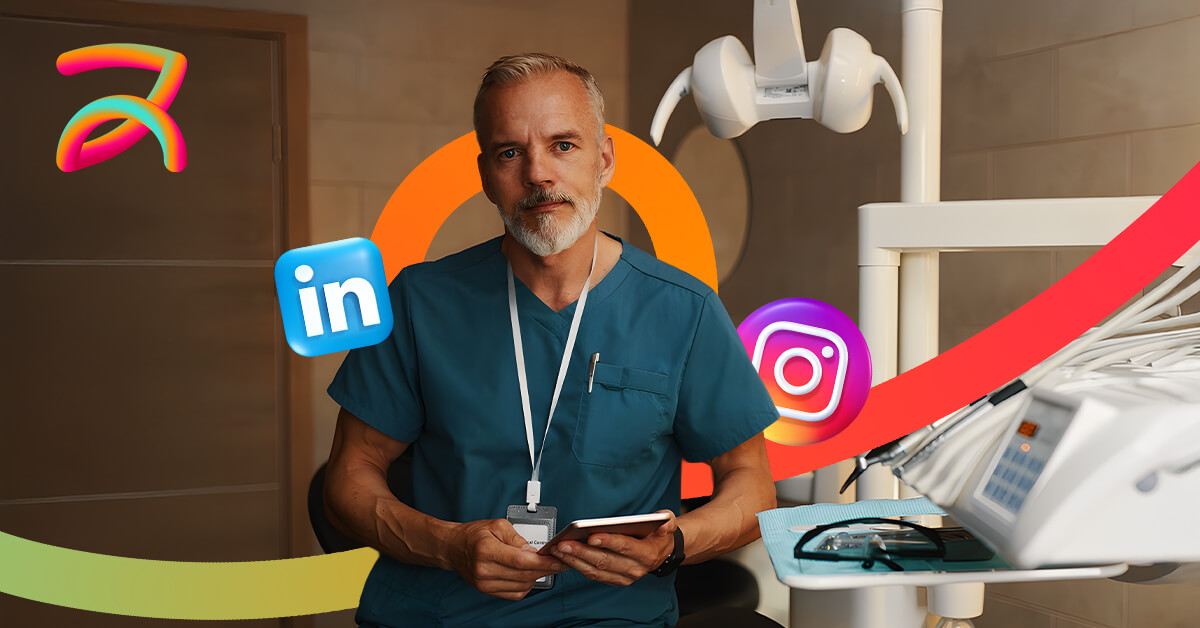
Your social media dental offers are not converting into appointments because the path from ad to booking is broken. Broad targeting, generic messaging, unclear calls to action, poor mobile experience, and sending users to the wrong pages create friction and reduce trust. When ads fail to address patient concerns like cost, comfort, or results and do not guide users clearly toward booking, interest fades quickly.
Patients expect a seamless and trustworthy experience online. Ads that speak directly to their needs, lead to dedicated landing pages, and make booking easy significantly improve engagement and conversion rates. Without this, even highly interested patients abandon your offers before scheduling.
In this guide, you will learn how to target the right audience, craft engaging messages, use effective landing pages, optimize for mobile, and build a trust-driven journey that turns social media offers into confirmed appointments.
Dental Offers Conversion Issues on Social Media
| Issue | How It Reduces Conversions |
| Broad Targeting | Reaching everyone in your city leads to low-quality leads and less engagement. |
| Generic Messaging | Fails to address patient concerns about cost, comfort, or results, reducing trust. |
| Unclear Calls-to-Action (CTAs) | Users don’t know what to do next, leading to drop-offs before booking. |
| Poor Mobile Experience | Hard-to-use pages or slow loading on phones frustrate users and increase abandonment. |
| Wrong Landing Pages | Sending clicks to the homepage instead of offer-specific pages creates friction and confusion. |
Why Social Media Dental Offers Get Engagement but Often Fail to Convert?
Social media dental offers can generate high likes, shares, and comments, but still fail to turn interest into appointments. Engagement metrics do not always accurately reflect a patient’s intention to book, especially for high-trust, high-cost procedures such as dental treatments. Many users interact with posts out of curiosity, deal-seeking behavior, or casual interest, rather than a readiness to schedule an appointment.
This gap matters because social media engagement alone does not grow your patient base. Without clear calls to action, trust-building content, and an easy booking process, interested users can quickly lose focus or turn to a competitor. Ensuring your ads address patient concerns, provide value, and direct users to a dedicated, actionable landing page is essential to converting engagement into appointments.
Social media campaigns for healthcare turn into appointments only 2.5% of the time, per Active Marketing’s 2025 guide. This shows most people who engage with the content do not book unless you add trust, clear next steps, and follow-up, which can raise conversions by up to 40%.
How Low Perceived Value Stops Patients From Booking?
Many social media dental offers fail because potential patients do not see enough value in the service or offer. If an ad does not clearly communicate benefits, address concerns, or build trust, users may engage with the content but hesitate to take the next step toward booking.
- Offers focus only on discounts without highlighting benefits or results
- Ads fail to address patient concerns about pain, cost, or outcomes
- Generic messaging that does not build credibility or authority
- Lack of testimonials, reviews, or before-and-after results
- Offers that appear too good to be true create skepticism
- Weak visual content that does not show real staff, patients, or results
- Missing clarity on what the patient gets or how the process works
When dental offers communicate clear benefits, address common patient concerns, and include trustworthy proof, engagement is more likely to convert into confirmed appointments.
Why Engagement Metrics Don’t Reflect Booking Intent?
High engagement on social media posts does not always indicate that users are ready to book appointments. Many interactions, such as likes, shares, or comments, are casual and do not reflect a patient’s decision-making process for dental care.
Reasons Engagement Often Misleads:
- Users like or share posts without the intent to book
- Social media attracts deal-seekers rather than loyal patients
- Browsing behavior is often passive and entertainment-focused
- Engagement may spike on visually appealing content rather than relevant offers
- Lack of follow-up systems causes initial interest to fade
- High interaction posts often miss clear CTAs or booking links
- Metrics do not measure trust or confidence in the practice
- Users may engage but compare multiple practices before deciding
Understanding that engagement is not the same as conversion helps practices design campaigns that guide users from interest to action. By combining trust-building content, clear CTAs, and follow-up processes, dental practices can turn social interactions into real appointments.
Is Your Dental Offer Valuable Enough to Justify an Appointment?
Dental offers only convert when they clearly demonstrate value to potential patients. Offers that address cost transparency, coverage details, preventive care, clinic reputation, convenience, and patient comfort create confidence and encourage booking. Generic discounts or unclear promotions fail because they do not answer patient concerns or justify the time and financial investment required for dental care.
Highlighting value in an offer matters because patients are cautious about both cost and quality when choosing a dental provider. Clear pricing, flexible payments, trustworthy credentials, and a comfortable clinic experience reduce uncertainty and build confidence. When patients perceive real benefit from the offer, they are far more likely to engage and schedule an appointment.
According to Resonate AI’s dental booking statistics, 71% of patients search online for dentists and prioritize clear pricing details before booking. Practices that emphasize value over discounts consistently achieve higher conversion rates and lower lead drop-offs.
Why Generic Dental Offers Fail to Motivate Action
Generic offers such as “All Services Discounted” or “Free Exam” rarely convert because they don’t address what patients truly care about. Patients want clarity, relevance, and trust. When an offer feels vague or impersonal, potential patients engage with the post but hesitate to book.
- Offers that do not specify procedures or costs leave patients unsure of the real value
- Generic discounts fail to address patient fears about pain, results, or hidden costs
- Lack of transparency in pricing or financing options reduces trust
- No personalization makes patients feel the offer is “one-size-fits-all.”
- Overly aggressive promotions can create skepticism instead of interest
- Ads without proof of clinic quality (reviews, staff, technology) struggle to convince
- Generic messaging does not differentiate the practice from competitors
Dental offers must clearly demonstrate specific value, transparency, and trustworthiness. Personalized and detailed promotions convert better because they answer patient concerns and guide them toward booking.
How Patients Weigh Effort, Fear, and Time Before Booking
Patients consider more than price when deciding whether to book a dental appointment. They evaluate the effort required to schedule, potential discomfort, time commitment, and overall convenience. Offers that simplify these concerns increase the likelihood of conversion.
- Appointment scheduling should be easy and quick, ideally online
- Patients fear pain or negative experiences; reassurance builds confidence
- Travel time, clinic hours, and location convenience affect decision-making
- Clear explanations of procedures reduce uncertainty and hesitation
- Flexible payment plans reduce financial barriers
- Trust signals like credentials, reviews, and technology increase confidence
- Follow-up communication helps hesitant patients commit
- Educational content addressing concerns (e.g., comfort, outcomes) improves booking rates
Understanding patient decision-making factors helps create offers that convert. By reducing perceived effort, addressing fears, and emphasizing convenience, dental practices can turn social media interest into confirmed appointments.
Are Your Social Media Dental Ads Reaching the Right Audience?
Many dental practices fail to convert social media leads because their ads are not reaching the right audience. Targeting too broadly or ignoring local, demographic, and interest-based filters results in low-quality leads who engage but rarely book. Ads must focus on ideal patients within a specific radius, who are genuinely interested in dental services like Invisalign, whitening, or implants. Maintaining visibility and trust on social media is easier with BUZZZ and their consistent social media management for dentists, keeping your offers in front of the right patients at the right time.
Precise targeting matters because even the most compelling offers and creative content will underperform if shown to the wrong audience. Reaching patients who are nearby, within the right age group, and actively seeking dental care ensures higher engagement, builds trust, and increases appointment bookings. It also prevents wasted ad spend on uninterested users.
Through managing dental social campaigns, we have discovered that hyper-local targeting significantly increases social media lead-to-appointment conversion rates compared to broadly targeted campaigns. Dental practices that leverage demographic and interest-based filters consistently see higher-quality leads and lower cost-per-booking metrics.
How Irrelevant Targeting Leads to Low Conversion Rates
Ads shown to the wrong audience often generate likes, clicks, or comments, but rarely appointments. Irrelevant targeting creates a mismatch between user interest and the service offered, resulting in wasted budget and low ROI. Patients who do not need the service are unlikely to follow through.
- Broad targeting reaches users who may not need dental services
- Ads shown outside your practice area reduce the likelihood of booking
- Ignoring age and demographic relevance limits appeal to the right patients
- Interest-based targeting is ignored; users uninterested in dental care click but do not convert
- Misaligned messaging fails to resonate with potential patients
- Wasted ad spend on users who never intend to book
- Low-quality engagement metrics can mislead your campaign decisions
Focusing on irrelevant audiences reduces both conversions and trust. Ads targeted strategically toward patients who need your services result in higher-quality leads and more booked appointments.
Why Demographic, Location, and Treatment-Based Targeting Matters
Targeting the right audience ensures your social media dental ads reach patients who are most likely to convert. Demographic filters, local radius targeting, and treatment-specific interests align your messaging with patient needs and increase the efficiency of your ad spend.
- Location targeting ensures only nearby patients see your ads
- Age and gender filters help match your services to the right demographic
- Treatment-specific targeting attracts patients seeking specific procedures like braces, whitening, or implants
- Interest-based targeting aligns ads with users already engaging with dental or wellness content
- Personalized content resonates more with the ideal audience
- Higher engagement from relevant users improves ad algorithm performance
- Targeted ads reduce wasted impressions and ad costs
- Builds credibility and authority by consistently showing up to the right audience
Precise demographic, location, and interest-based targeting increases the likelihood that social media interactions lead to booked appointments. The right audience ensures your offers reach patients who truly need and want your services.
Is a Weak Call to Action Creating Friction in the Booking Process?
Weak calls to action (CTAs) create friction in the dental booking process by leaving patients unsure of what to do next. Vague language, misaligned context, long forms, and a lack of clear benefits cause hesitation, confusion, and dropped conversions. Clear, benefit-focused CTAs that match the patient’s journey guide potential patients seamlessly from social media engagement to confirmed appointments.
Strong CTAs are essential because they reduce perceived effort and risk for patients. By clearly stating the value of the action and simplifying the next step, they improve trust, encourage immediate engagement, and make the booking process straightforward. Without strong CTAs, even interested patients may abandon the process.
According to Fetch & Funnel’s healthcare CRO article, optimizing CTAs for clarity and benefit, such as changing “Schedule Now” to “Book Today,” can increase appointment conversions by 37.5%. Simplified and context-aligned CTAs lead to smoother user journeys and higher patient acquisition rates.
Why Vague CTAs Confuse Potential Patients
Vague CTAs fail to provide patients with a clear reason or direction to take the next step. Phrases like “Click Here” or “Submit” do not communicate the value or benefit of taking action, leaving patients unsure and less likely to convert.
- Vague language does not convey benefit or urgency
- Misaligned context asks for commitment too early, creating hesitation
- Long forms or complex steps increase perceived effort
- Lack of value makes patients question the benefit of booking
- Small or poorly designed buttons frustrate users, especially on mobile
- Generic CTAs reduce confidence in the clinic’s professionalism
- Confusing placement of CTAs breaks the flow of the patient journey
- Inconsistent CTA messaging across platforms weakens engagement
Vague CTAs create unnecessary confusion and hesitation. Clear, benefit-driven, and context-aligned messaging is critical to guiding patients smoothly toward booking an appointment.
How Simplified Online Booking Increases Appointments
Simplifying the online booking process removes barriers that stop patients from completing their appointments. Benefit-oriented CTAs combined with minimal steps, clear instructions, and trust-building microcopy improve patient confidence and increase completed bookings.
- Use specific, action-oriented CTAs like “Book Your Free Consultation.”
- Highlight value or benefit in the CTA for immediate clarity
- Reduce the steps in the form to only essential information
- Add risk-reducing microcopy like “No Credit Card Required.”
- Align CTA strength with the user’s journey stage
- Include urgency or limited-time offers to motivate action
- Ensure buttons are visible, mobile-friendly, and easy to tap
- Maintain consistent CTA messaging across ads, posts, and landing pages
Simplified booking with clear, benefit-driven CTAs turns hesitant visitors into confirmed appointments. Reducing friction improves conversion rates and enhances the patient experience.
Are Trust Gaps and Poor User Experience Preventing Conversions?
Trust gaps and poor user experience on dental social media landing pages prevent conversions by creating friction, confusion, and doubt. Slow load times, complicated navigation, unclear messaging, missing trust signals, and bad mobile design make potential patients hesitate or leave. When users do not feel confident in your practice or cannot navigate easily, even interested leads fail to book appointments.
Building trust and providing a smooth user experience is crucial because it directly impacts patient confidence and willingness to act. Clear messaging, fast load times, visible reviews, and easy navigation reduce abandonment and guide patients seamlessly toward booking, improving both engagement and conversions.
How Hidden Costs and Complex Terms Break Trust
Hidden costs, unclear policies, or complicated terms create uncertainty for patients, eroding confidence in your dental practice. When potential patients cannot easily understand what an offer includes or what they will pay, they are more likely to abandon the booking process.
- Lack of transparent pricing or itemized costs creates suspicion
- Surprise fees after initial engagement reduce credibility
- Complicated financing or treatment terms overwhelm users
- Hidden form fields or excessive information requests discourage completion
- Missing explanations of coverage, insurance, or procedures increases doubt
- Poorly communicated policies (cancellations, refunds) create fear
- Overly technical language or jargon confuses non-expert patients
- Inconsistent messaging between the ad, page, and booking form reduces trust
Clear, transparent pricing and simple terms build trust and reduce friction. Patients are more likely to complete bookings when they feel informed, secure, and confident in your practice.
Why Inconsistent Branding and Poor Landing Pages Cause Drop-Offs
Inconsistent branding and poorly designed landing pages signal unprofessionalism and reduce patient confidence. When the look, feel, or messaging of your social media ads does not match the landing page, users may feel misled and leave before taking action.
- Ads and landing pages must share consistent colors, fonts, and imagery
- Messaging should clearly repeat the offer and value proposition
- Missing or hard-to-find CTAs confuse users about the next step
- Slow page load times frustrate visitors and increase abandonment
- Broken mobile designs or small buttons reduce usability
- Lack of testimonials, reviews, or security badges reduces credibility
- Overly cluttered pages distract from the main goal (booking)
- Confusing navigation or hidden buttons create invisible friction
Consistent branding and well-designed landing pages create a seamless patient journey. Clear visuals, simple navigation, and trust signals increase engagement and appointment conversions.
How Can You Turn Social Media Dental Offers into Booked Appointments?
Dental practices can convert social media offers into booked appointments by creating engaging, trust-building content, using clear calls-to-action, and integrating seamless booking systems. Targeted local ads, automation for reminders, and fast follow-up ensure a friction-free patient journey from click to consultation. Without a clear path from engagement to booking, even interested patients often abandon the process.
Dental practices work with BUZZZ to turn social media engagement into booked appointments using our conversion-focused social media management services to create a smooth path from interest to action.
Focusing on trust, clarity, and convenience is crucial because patients expect a smooth, informative experience online. When content answers questions, builds confidence, and guides patients directly to booking, conversion rates improve. Streamlined processes reduce hesitation and keep leads engaged throughout the patient journey.
With our hands-on experience managing dental social media, we’ve seen practices that combine targeted content, strong calls to action, and seamless booking achieve up to 3x higher appointment conversions. Practices that automate reminders and follow-ups consistently capture more leads that would otherwise be lost.
How to Create High-Value, Outcome-Focused Dental Offers
High-value offers focus on real patient outcomes and address common concerns directly. By highlighting results, providing clarity, and educating patients, practices build trust and encourage action. Content should showcase tangible benefits rather than just discounts.
- Share before-and-after photos or videos with patient consent
- Answer frequently asked questions about treatments and procedures
- Create carousel posts or short videos for easy consumption
- Highlight unique services like pediatric dentistry or emergency care
- Introduce dentists and staff through short videos to build familiarity
- Post patient testimonials to demonstrate credibility
- Repurpose content across Stories, Reels, and feed posts for reach
- Showcase educational content that positions your practice as an authority
Outcome-focused offers build patient confidence and trust. Clear, relatable content increases engagement and moves users closer to booking.
How to Match the Right Offer With the Right Audience
Targeting the correct audience ensures that your offers reach patients who are most likely to convert. Using local, demographic, and treatment-specific targeting improves relevance and maximizes return on ad spend.
- Define ideal patient personas based on age, location, and dental needs
- Use platform tools to target users within your clinic’s service radius
- Focus on interests related to oral health and specific treatments
- Exclude irrelevant audiences to reduce wasted clicks
- Test different audience segments to see which converts best
- Engage with local communities to improve visibility and trust
- Adjust targeting based on analytics and patient behavior
- Retarget users who interacted with previous content but did not book
Precise targeting increases ad relevance and patient intent. When offers reach the right people, conversion rates rise, and ad spend is used efficiently.
How to Use Clear CTAs and Frictionless Booking Systems
Clear calls-to-action and easy booking processes reduce friction and guide patients directly to appointments. Confusing buttons, long forms, or vague instructions often cause drop-offs, even among engaged leads.
- Use strong, benefit-oriented CTAs like “Book Your Free Consultation.”
- Integrate direct booking buttons on Instagram and Facebook profiles
- Minimize form fields to essential information only
- Offer options for online or in-app scheduling
- Include microcopy to reduce perceived risk (“No Credit Card Required”)
- Use consistent branding and CTA placement across platforms
- Test different button designs and placements for usability
- Provide instant confirmation or chatbot assistance after booking
Clear, simple CTAs and frictionless booking paths increase patient confidence. Streamlined systems guide users seamlessly from interest to confirmed appointments.
How to Improve Post-Click Experience and Follow-Up Speed
The experience after a patient clicks your offer determines whether they complete the booking. Fast follow-up, mobile-friendly pages, and personalized communication ensure users remain engaged and motivated to schedule.
- Ensure landing pages load quickly and are mobile-optimized
- Highlight trust signals such as reviews, certifications, and testimonials
- Provide concise, clear information about the offer and next steps
- Use automated chatbots to answer questions and book appointments
- Send reminders and follow-ups to leads who do not immediately book
- Retarget users with ads or messages if they abandon the booking path
- Track patient journey with UTM parameters to measure performance
- Adjust content and process based on feedback and analytics
A seamless post-click experience and prompt follow-up retain patient interest. Consistent, quick responses and optimized pages increase the likelihood of booking. For strategies on converting every DM into a confirmed appointment, read our detailed blog on How Can Dentists Turn Every DM Into a Booked Appointment?
Final Thoughts
Converting social media dental offers into booked appointments requires more than just posting deals. Practices must create high-value, outcome-focused content, target the right audience, and provide a seamless booking experience that builds trust and reduces friction. Every step from ad engagement to scheduling should feel clear, convenient, and reassuring to the patient.
Fast follow-up, clear calls-to-action, optimized landing pages, and consistent communication make the difference between a curious lead and a confirmed appointment. By focusing on trust, clarity, and patient experience, dental practices can turn social media engagement into real, measurable growth in appointments.
🎯 How BUZZZ Can Help You?
Let BUZZZ handle your dental social media offers and guide patients smoothly from interest to confirmed appointments.
Book Your Dental Offer Conversion Appointment →